Inside the Navy’s Hedge Strategy: Scaling Asymmetric, Combat-Ready Naval Power
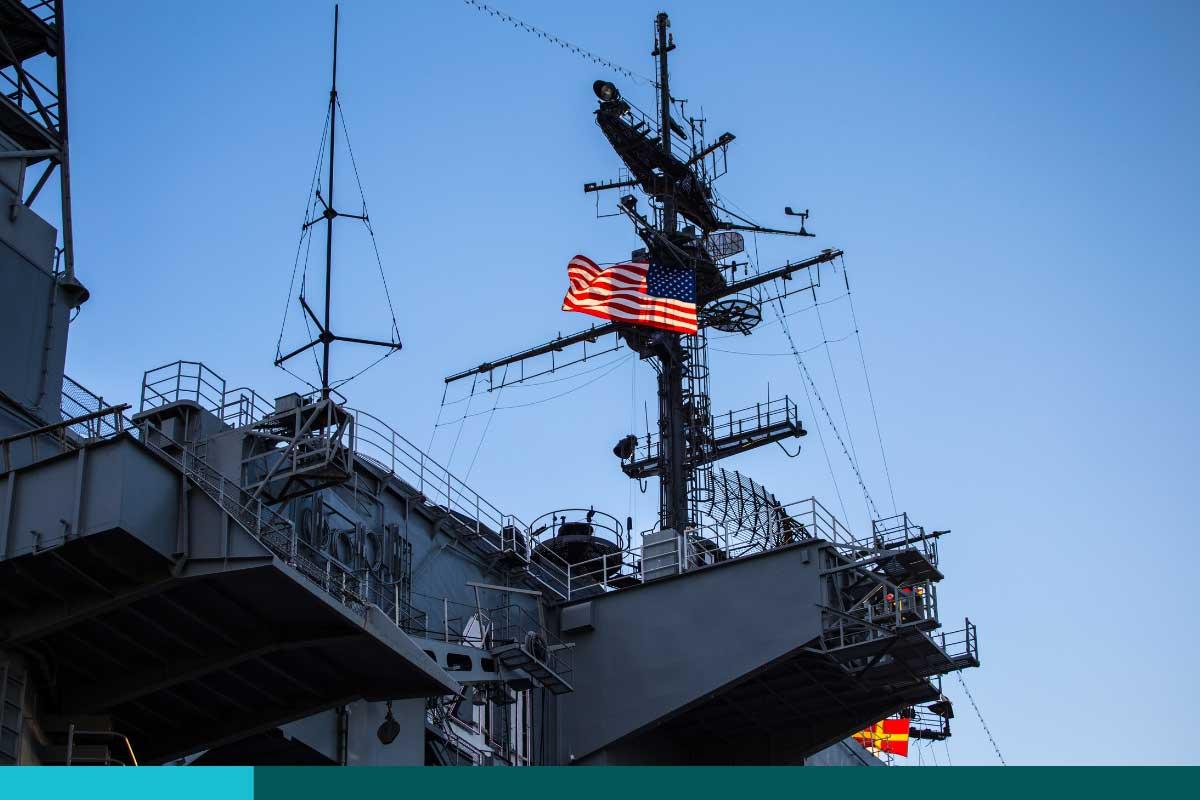
In early February, Chief of Naval Operations Admiral Daryl Caudle unveiled the details of the US Navy’s 2026 Hedge Strategy. As the Navy is facing a great power competition, rapid technological change and strain on the defense industrial base, it is critical to adapt an innovative operational and strategic approach to maintain adversarial advantage. The strategy shifts away from dominance by mass towards a risk-balanced operational approach that has asymmetric, combat-ready capability. In other words, they are “hedging their bets” on more tailored capabilities and nimble operations.
Rather than relying on high-end platforms that are optimized for a single threat, the Navy is looking for scalable, resilient and adaptable forces that can respond across a wide range of conflict scenarios. The approach emphasizes rapid deployment, accelerated iteration and more cost-effective combat power. It is intended to balance fiscal, industrial and operational realities without compromising on lethality and readiness.
Tailored Offsets & Tailored Forces
One of the key aspects of the strategy is tailored offsets and tailored forces. Tailored offsets are modular, scalable, rapidly deployable, adaptable and cost-effective capabilities intended to augment the main battle force. These include manned and unmanned platforms, autonomous systems and distributed command and control nodes. Drones are a critical part of the Navy’s “hedging” approach as well, for both counter-drone and low-cost offensive drones to be an option for cost-effective and rapid deployment of combat-ready power. It opens opportunities for technology firms to support unmanned platforms, edge compute for autonomous operations and modular and interoperable hardware packages. Vendors and partners able to produce affordable mass without sacrificing interoperability will be well positioned.
Tailored forces combine multiple tailored offsets to address specific mission areas in particular regions. This could include surface combatants, patrol aircraft and submarines for command, control and deployment. Tailored forces and offsets will give the Navy the opportunity to increase flexible response options, manage risk and expand combat-ready power. This approach presents opportunities for companies to provide mission-specific and adaptable systems such as cross-domain integration tools, plug-and-play sensors and modular configuration kits. Vendors and partners that enable flexible configurations across regions and cross-domain tools and enable adaptable and interoperable capability will be at an advantage.
Readiness & Speed
To ensure success of mission-focused forces, readiness matters as much as force structure. The Hedge Strategy proposes Combat Surge Ready (CSR) certifications and the Global Maritime Response Plan (GMRP) to tie force generation to rapid transition and mobilizations from peacetime to crisis scenarios. Part of this plan is to attack long-term modernization challenges with shorter, more frequent maintenance, better designed and phased modernization periods and more aggressive material management. This shift prioritizes supply chain acceleration, rapid prototyping and scalable production capacity to meet demands. Companies must demonstrate not only technological superiority but also the ability to manufacture, field and sustain systems quickly. Digital engineering environments, additive manufacturing partnerships and production scaling capabilities will become differentiators. There will be opportunity for vendors and partners with predictive maintenance tools, logistics tracking platforms, distributed sustainment technologies and secure data-sharing platforms across fleets. Solutions that reduce friction in surge mobilization and improve measurable readiness metrics will be best aligned to CSR and GMRP priorities.
Mission Enablement
To operationalize tailored forces at scale, the Navy is advancing an Enhanced Mission Command Framework (EMCF) built around delegated authority and decentralized command and control. This aligns with the broader concept of Distributed Maritime Operations (DMO), where forces must sense, decide and act without constant reach back to centralized command. As a result, adaptation to operational realities can be faster and distributed forces can be more resilient in executing operations when there is command and control degradation.
The shift to delegated authority, especially in contested environments, creates further demand for resilient and mesh networking solutions, secure data relays and secure communications for distributed systems. Vendors and partners building modular, secure architectures, digital mission systems, optimized communications and AI-enabled decision support will likely find opportunity as the Navy transitions to an EMCF.
Strategic Positioning for Industry
The Hedge Strategy is a response to a constantly changing technology and adversarial environment where the speed of decision making and response readiness is critical. As such, the Navy is demanding asymmetric, scalable, combat-ready capability delivered faster and cheaper, without sacrificing resilience. Industry is expected to accelerate production, iterate rapidly and provide mission-specific modularity. It will be important to prioritize interoperability for cross-platform integration, design for modular and scalable deployment and enable distributed operations. Companies that can clearly articulate how their offerings enable tailored forces, support mission command resilience and improve combat surge readiness will be best positioned in the Navy’s emerging demand environment.
To get more TD SYNNEX Public Sector Market Insight content, please visit our Market Intelligence microsite.
About the Author:
Nikki Hamlin is a senior analyst on the TD SYNNEX Public Sector Market Intelligence team covering trends across the federal market. Nikki has more than 8 years of experience in federal procurement research and analysis, providing critical insights to support businesses in making informed decisions across civilian and defense agencies.
Related Blog Posts