From Strategy to Speed: Takeaways From WEST
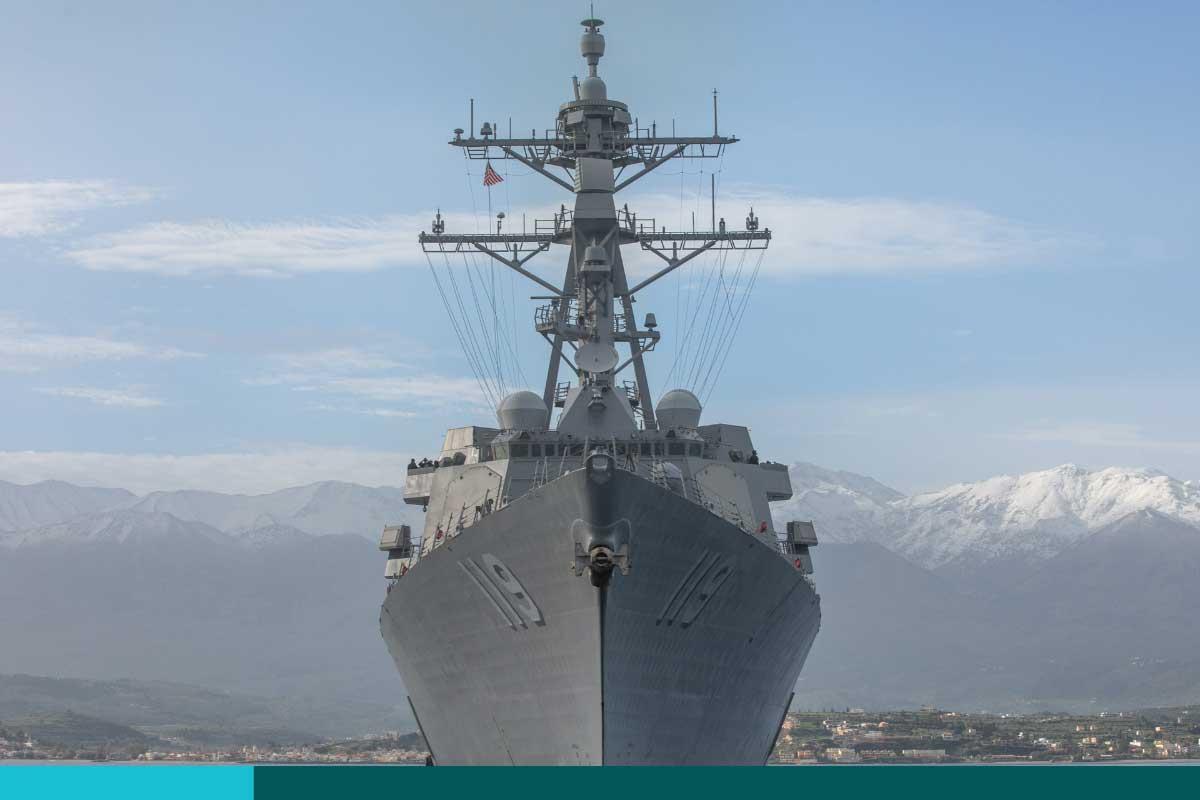
At WEST this year, Department of the Navy leaders signaled a clear shift in modernization priorities: the debate is no longer about adopting emerging technology or drafting strategy documents. Instead, we’re seeing operational speed, how quickly the Navy can field capability, integrate systems and make decisions, become the objective. Across sessions on shipbuilding, acquisition transformation, AI, Zero Trust and maritime force design, the recurring theme was speed matters most. That language now appears directly in the Navy’s newly released Fighting Instructions and accompanying Hedge Strategy.
The Fighting Instructions, unveiled by the Chief of Naval Operations, establish a service-wide framework for how the Navy organizes, trains, equips and fights in a contested environment. At the center is the Hedge Strategy, which emphasizes scalable, adaptable forces that can operate across a spectrum of conflict while maintaining high-end warfighting capability. The strategy recognizes that adversaries are innovating rapidly and that the naval enterprise must compress decision timelines to maintain advantage.
The keynote on naval modernization reinforced that urgency. Secretary of the Navy John Phelan framed the Golden Fleet initiative around three priorities: changing how the Navy does business, rebuilding the fleet and revitalizing the maritime industrial base. Backed by significant shipbuilding investment, industrial throughput and acquisition reform are now operational imperatives. Leaders spoke about consolidating authorities, accelerating procurement pathways and aligning acquisition with execution. The shift away from perfection before deployment toward iterative, mission-driven capability delivery reflects the broader emphasis on speed embedded in the Fighting Instructions.
Artificial intelligence was positioned as central to achieving that speed as well. Discussions focused on predictive maintenance, logistics optimization, sensor fusion at the edge, planning acceleration, adversarial simulation and talent management. AI is being embedded to improve existing workflows rather than replacing them. The objective is compression of planning cycles, automation of repetitive processes and faster translation of data into operational decisions. Leaders acknowledged that AI adoption has entered a new phase, particularly with agentic capabilities that can independently orchestrate tasks, but they also emphasized the need for governance, testing and performance benchmarks.
At the same time, structural constraints remain significant. The Navy continues to operate hundreds of thousands of legacy systems, many of which are poorly interoperable and difficult to maintain. Data remains fragmented across incompatible formats, with examples such as dozens of separate HR systems that cannot easily communicate. Institutional knowledge of older systems has eroded, compounding integration challenges. Networking and power limitations aboard legacy platforms complicate deployment of compute-intensive AI tools. The core barrier to modernization was really framed as architectural fragmentation.
Zero Trust discussions underscored that cybersecurity continues to be foundational. Identity, Credential and Access Management (ICAM) remains the starting point, followed by continuous monitoring and accurate inventory of users, devices and systems. Zero Trust must extend from the enterprise to the edge, particularly in maritime environments characterized by limited bandwidth and mixed classification levels. Navy officials further noted as digitization expands and sensor needs increase, the attack surface grows. Cyber readiness must then scale in parallel with AI deployment.
Across sessions on information dominance, leaders described data as the new ammunition. It must be standardized, transformed and delivered in mission-ready form to operators. Information advantage drives decision advantage. Interoperability between enterprise and tactical systems is critical, and readiness is increasingly measured by how quickly insights can move from data collection to action.
For vendors and partners, WEST delivered a consistent message. The Navy is embracing AI and digital transformation, but it is doing so within a framework that prioritizes governance, modularity and rapid fielding. Solutions must integrate across legacy environments, operate effectively at the edge and align with modular open systems approaches. IT companies that can reduce friction across data silos, infrastructure constraints, cybersecurity requirements and acquisition timelines will be better positioned than those offering standalone tools.
The Fighting Instructions and Hedge Strategy provide the doctrinal backdrop. They formalize what was evident throughout the conference: modernization is no longer about aspiration. It is about execution tempo. Strategy is established. The differentiator now is how quickly capability reaches the warfighter and how effectively it supports resilient, interoperable, decision-driven operations.
To get more TD SYNNEX Public Sector Market Insight content, please visit our Market Intelligence microsite.
About the Author:
Susanna Patten is a senior manager on the TD SYNNEX Public Sector Market Insights team covering tech trends across the Public Sector. Susanna has over 15 years of experience in public sector IT procurement. Her responsibilities at TD SYNNEX Public Sector include driving market intelligence asset production, ensuring the quality and relevance of deliverables from the Market Insights team, and aligning these insights with sales opportunities.
Related Blog Posts