FY27 Federal Budget Request: What You Need to Know

The FY27 federal budget request was released on April 3rd, and is providing an initial look at the momentum and impact IT investments will have in the coming years.
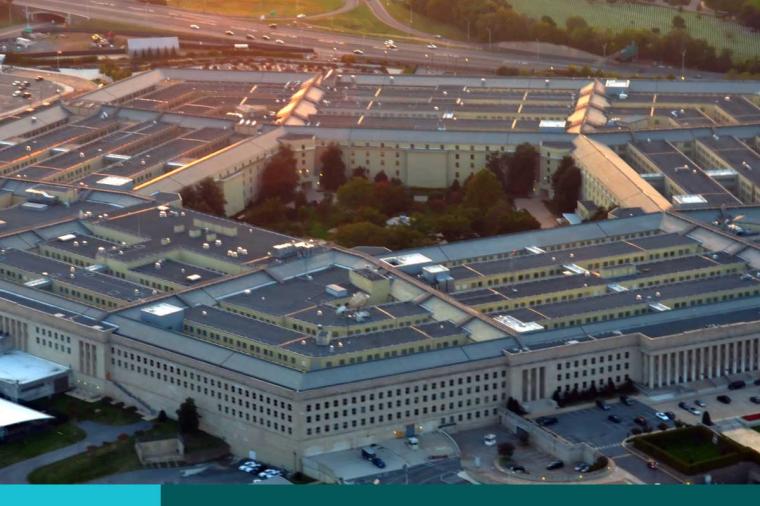
The Department of War’s unprecedented $1.5T request underscores attention on national security and pushing towards next-generation warfighting capabilities, while across the whole of government, there is expected to be a continued mandate to drive efficiency, consolidate systems and align technology investments with administration priorities.
Civilian Agencies
Civilian IT budgets are mixed with funding boosts in some areas and cuts in others. Out of the top 23 CFO Act non-defense agencies, 12 are positioned to receive an increase in the FY27 budget request.
The Department of Veteran’s Affairs is a major winner with a $12.2B IT budget, a 62% increase over its FY26 request. This includes an $800M increase for the Electronic Health Record Modernization (EHRM), continuing growing investment from FY26. Beyond EHRM, there is $389M requested for IT systems to accelerate cyber efforts, continue implementation of modern integrated financial and acquisition systems and strengthen digital platforms. Vendors and partners can expect to see continued demand for data integration, data fabric solutions, AI-driven service delivery and AI-enabled workflow automation.
The Department of Homeland Security (DHS), with $11.7B requested for IT, is more of a mixed bag. While the total IT funding request is strong, there is ongoing uncertainty tied to the partial government shutdown and the likelihood of continuing resolutions or reconciliation bills. Notably, the Cybersecurity and Infrastructure Security Agency (CISA) faces a $707M cut for FY27, following staff cuts and leadership changes. The budget reduction is intended to refocus the agency on its core mission for network defense and critical infrastructure protection.
At the same time, the U.S. Coast Guard (USCG) and the U.S. Secret Service (USSS) will see increased IT investments. This includes USSS requesting $1.2B for protective technologies and protective operational technologies ahead of major events such as the 2026 World Cup and the 2028 Olympics.
At the Department of Health and Human Services (HHS), the $9.5B IT budget tries again for the sweeping reorganizational efforts under the Make America Healthy Again (MAHA) initiative put forward in FY26. This will drive demand for system integration, data interoperability and cloud, with AI playing a growing role in areas like FDA operations and broader health research.
Elsewhere, agencies like Treasury, Transportation, Justice and Energy are aiming to reinforce investments in modernization, AI and automation. Treasury saw cuts to programs, such as Direct File, and technical staff, signaling an increased reliance on AI and automation to offset workforce constraints. DOT will continue major investments in their air traffic control system modernization and telecommunications systems, as well as $1.5B set aside for their Maritime Action Plan.
DOE is requesting a $1.2B investment to support seven AI supercomputers at Argonne and Oak Ridge National Labs as part of the Genesis Mission AI push. Additional funding requested for energy and infrastructure resilience also highlights the government’s commitment to advanced computing, energy dominance and national security.
Defense
The Department of War has requested a historic $1.5T for defense spending in FY27, $1.15T designated for discretionary with an expected additional $350B from a forthcoming reconciliation package. Navy and Air Force, including the Space Force, would receive the largest shares, $150B and $101.2B respectively. While detailed budget documents are yet to be released, there are clear signals focusing investments on digital modernization, cyber, AI, missile defense and drone efforts.
The department is expected to continue aggressively pushing to consolidate legacy platforms and modernize into better digital ecosystems. Industry can also expect to see accelerating investments to modernize command and control capabilities, data pipelines and predictive analytics across operations to improve resilience and readiness.
Additionally, the department has $11.3B allocated to cyber-related activities, $4.2B for sovereign AI infrastructure, and additional investments to scale the AI ecosystem. Programs like GenAI.mil and broader efforts to scale AI across the enterprise will drive demand for secure cloud environments, high-performance compute, data pipelines and software-driven platforms.
The high-profile Golden Dome initiative is expected to receive $17.5B in additional funding, however it will mostly rely on reconciliation funding. There is also an unprecedented $1.5B investment in unmanned and counter-unmanned systems, following strong strategic shifts across the services in FY26.
For vendors and partners, there are several things to watch for:
- Procurement favoring integration into enterprise systems over standalone tools
- Sustained investment in cybersecurity, AI and emerging technologies
- Heightened focus on critical infrastructure and defense industrial base security
What to Watch in FY27
Across both civilian and defense agencies, several themes are likely to shape FY27 investments:
1. AI is Everywhere
AI remains a top administration priority and agencies are working to implement the AI Action Plan. Agencies are working through use cases for AI embedded across healthcare, defense, finance and infrastructure, driving demand for both AI applications and infrastructure.
2. Cloud as the Backbone
The push toward consolidation and software-defined infrastructure is reinforcing the need for cloud services and cloud adoption. Hybrid and multi-cloud environments are becoming standard, driven by the need to support AI workloads and modern digital services.
3. System Integration & Data Governance
Agencies are prioritizing connected ecosystems over siloed systems. This creates opportunity for technology companies that can integrate across legacy and modern environments while enabling secure, interoperable, data sharing at scale.
4. Operational Efficiency
There is sustained pressure to eliminate duplicative programs and streamline operations across the federal space. Solutions that deliver measurable cost savings and performance improvements will have a competitive edge.
5. Critical Infrastructure & Supply Chain Security
Investments are rising in securing energy systems, ports and telecommunications. These priorities algin with broader administration goals for energy dominance, supply chain security and critical infrastructure modernization.
To get more TD SYNNEX Public Sector Market Insight content, please visit our Market Intelligence microsite.
About the Author:
Nikki Hamlin is a senior analyst on the TD SYNNEX Public Sector Market Intelligence team covering trends across the federal market. Nikki has more than 8 years of experience in federal procurement research and analysis, providing critical insights to support businesses in making informed decisions across civilian and defense agencies.
Related Blog Posts