
Cloud Computing
Transitioning to the cloud? Chances are, when you make the transition, you’ll take baby steps – assessing your workloads in totality and individually, determining the most efficient platform, preparing thoroughly and then migrating just that workload, then the next, and so on. It’s standard procedure and is the best way to proceed with minimal risk.
What you’ve done here is create a hybrid environment. Most of your IT is still on-premise, but certain workloads are in the cloud. And it’s likely to stay that way.

Cybersecurity, Data
Cloud computing has made collecting, storing, and processing data easier and cheaper than ever. Agencies are increasingly leveraging big data to drive actionable insights and improve cyber threat detection. Furthermore, more than 60% of agencies are using big data to reduce costs and operating expenses, writes Information Week.
Cybersecurity
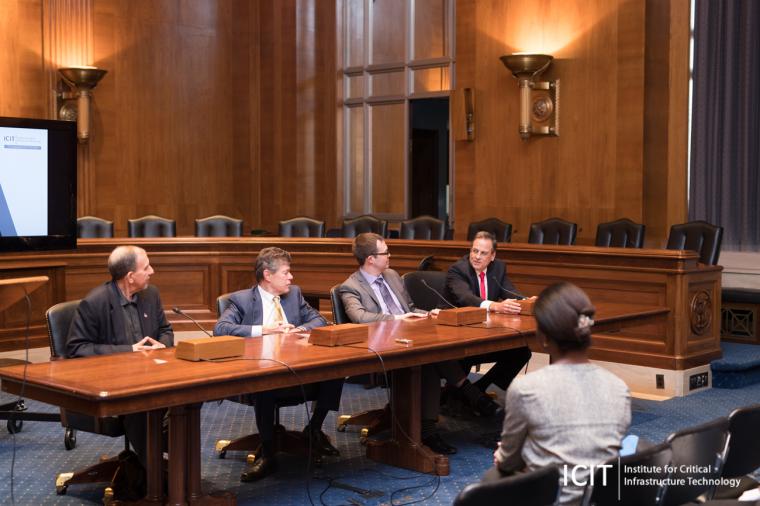
Our very own Chief Cybersecurity Technologist and Institute for Critical Infrastructure Technology (ICIT) fellow, Don Maclean, recently joined fellow fellows Robert Lord (Protenus), John Menkahart (Securonix), Dr. Ron Ross (NIST) and ICIT co-founder and senior fellow, Parham Eftekhari on Capitol Hill to discuss the risks and threats associated with cyber attacks on healthcare facilities.

Digital Design
BIM, a process for creating and using a 3D intelligent model for planning, designing, building, and managing infrastructure, is used across multiple industries to get accessible and actionable insight throughout project lifecycles. BIM improves coordination, creates and delivers intelligent models, and reduces rework and material waste.
Since utilities drive some of the largest construction budgets, applying the principles of BIM as you update old and build new infrastructure can improve cost control and reduce construction waste below the typical 30% level. How?

Cybersecurity
Nothing seems to surprise us anymore when it comes to cybersecurity. Attacks against government agencies and businesses are constantly in the headlines. Just last year, DLT partner, Symantec, discovered more than 430 million new unique pieces of malware across its Global Intelligence Network – that’s an increase of 35% over the previous year.

Cybersecurity, Data
We all know that sifting through data is an overwhelming challenge for federal agencies. Various data types, stored across a range of disparate siloes, and a lack of resources to analyze the sheer amount of data, has long held up data analytics in government.