GovIT Podcast Series: TD SYNNEX Public Sector Discusses Securing Success in the Federal Government’s Busy Buying Season

This is part of a podcast series where the TD SYNNEX Public Sector Market Insights team provides insights and analysis on IT opportunities across the public sector. This episode features Kevin Shaker, Senior Manager of Lead Gen & Market Intelligence where he discusses the opportunities around, and how to navigate, the federal government’s fiscal year-end. Listen to the full podcast here.
To get more TD SYNNEX Public Sector Market Insight content, please visit our Market Intelligence microsite.
About the Author:
Kevin Shaker is the Senior Manager of Lead Gen & Market Intelligence on the TD SYNNEX Public Sector Market Insights team, specializing in helping technology companies find additional opportunities in the U.S. public sector.
Related Blog Posts

Cloud, Cybersecurity, Education, Market Intelligence, Technology
School districts are often seen as easy targets for cyberattacks given an abundance of sensitive information but little security. According to the Department of Homeland Security, more than 1,300 cybersecurity incidents happened between 2018-2021 (not including non-publicly documented incidents). The Department of Education says that every week the average school district experiences 5 cyber incidents.
Austin Gardner
Cloud, Cybersecurity, Education, Market Intelligence, Technology
School districts are often seen as easy targets for cyberattacks given an abundance of sensitive information but little security. According to the Department of Homeland Security, more than 1,300 cybersecurity incidents happened between 2018-2021 (not including non-publicly documented incidents). The Department of Education says that every week the average school district experiences 5 cyber incidents.
Austin Gardner

Cloud, Cybersecurity, Market Intelligence, State & Local Government, Technology
Over the last few years, SLED cloud strategy has played a pivotal role in public sector modernization efforts. Agencies have invested in application migration, utilized more software-as-a-service capabilities, and constructed increasingly hybrid environments across public cloud, private cloud, and on-premises infrastructure.
Yvonne Maffia
Cloud, Cybersecurity, Market Intelligence, State & Local Government, Technology
Over the last few years, SLED cloud strategy has played a pivotal role in public sector modernization efforts. Agencies have invested in application migration, utilized more software-as-a-service capabilities, and constructed increasingly hybrid environments across public cloud, private cloud, and on-premises infrastructure.
Yvonne Maffia

Cybersecurity, Federal Government, Market Intelligence, Technology
The defense industrial base is a critical partner in advancing the DOW’s national defense priorities. To accelerate industry participation, the DOW has launched the Golden Dome Hub as a practical digital entry point for organizations that want to contribute to the Golden Dome Initiative.
Toan Le
Cybersecurity, Federal Government, Market Intelligence, Technology
The defense industrial base is a critical partner in advancing the DOW’s national defense priorities. To accelerate industry participation, the DOW has launched the Golden Dome Hub as a practical digital entry point for organizations that want to contribute to the Golden Dome Initiative.
Toan Le
Cybersecurity, Federal Government, Market Intelligence, Technology
The defense industrial base is a critical partner in advancing the DOW’s national defense priorities. To accelerate industry participation, the DOW has launched the Golden Dome Hub as a practical digital entry point for organizations that want to contribute to the Golden Dome Initiative.
Toan Le

AI, Market Intelligence, State & Local Government, Technology
Over the last few years, AI has been the hot topic of conversation in SLED IT. We’ve seen AI move from theoretical to actual implementation. SLED agencies are now deploying AI across a wide range of use cases including citizen services, workforce productivity, document processing, case management, fraud detection, and analytics and decision support, among others.
Yvonne Maffia
AI, Market Intelligence, State & Local Government, Technology
Over the last few years, AI has been the hot topic of conversation in SLED IT. We’ve seen AI move from theoretical to actual implementation. SLED agencies are now deploying AI across a wide range of use cases including citizen services, workforce productivity, document processing, case management, fraud detection, and analytics and decision support, among others.
Yvonne Maffia

Education, Market Intelligence, State & Local Government, Technology
Kirsten Baesler, Assistant Secretary for the Office of Elementary and Secondary Education, made clear in an August 2026 Dear Colleague Letter (DCL) that technology certainly plays an important role in education. At the same time, vendors and partners need to increase transparency and shoulder accountability with schools regarding student success and outcomes.
Austin Gardner
Education, Market Intelligence, State & Local Government, Technology
Kirsten Baesler, Assistant Secretary for the Office of Elementary and Secondary Education, made clear in an August 2026 Dear Colleague Letter (DCL) that technology certainly plays an important role in education. At the same time, vendors and partners need to increase transparency and shoulder accountability with schools regarding student success and outcomes.
Austin Gardner

IT Infrastructure, Market Intelligence, News, State & Local Government, Technology
In FY27, state and local governments are navigating a complex technology environment amid changes in policy, the accelerated adoption of emerging tech, and the rapid growth of digital services and citizen expectations. Cloud adoption continues to impact technology consumption; AI is introducing challenges around data, security, governance and contracting; and agencies are facing mounting pressures to modernize aging systems while becoming more efficient and generating measurable long-term ROI.
Yvonne Maffia
IT Infrastructure, Market Intelligence, News, State & Local Government, Technology
In FY27, state and local governments are navigating a complex technology environment amid changes in policy, the accelerated adoption of emerging tech, and the rapid growth of digital services and citizen expectations. Cloud adoption continues to impact technology consumption; AI is introducing challenges around data, security, governance and contracting; and agencies are facing mounting pressures to modernize aging systems while becoming more efficient and generating measurable long-term ROI.
Yvonne Maffia

Cybersecurity, Federal Government, IT Infrastructure, Market Intelligence, Technology
The Defense Health Agency (DHA) recently hosted the 2026 Defense Health Information Technology Symposium (DHITS) in New Orleans, bringing together more than 2,200 attendees to discuss the future of military health IT. The clear message throughout the event was that technology, data, and digital capabilities are increasingly viewed as a combat support capability directly tied to warfighter readiness.
Nikki Hamlin
Cybersecurity, Federal Government, IT Infrastructure, Market Intelligence, Technology
The Defense Health Agency (DHA) recently hosted the 2026 Defense Health Information Technology Symposium (DHITS) in New Orleans, bringing together more than 2,200 attendees to discuss the future of military health IT. The clear message throughout the event was that technology, data, and digital capabilities are increasingly viewed as a combat support capability directly tied to warfighter readiness.
Nikki Hamlin
Cybersecurity, Federal Government, IT Infrastructure, Market Intelligence, Technology
The Defense Health Agency (DHA) recently hosted the 2026 Defense Health Information Technology Symposium (DHITS) in New Orleans, bringing together more than 2,200 attendees to discuss the future of military health IT. The clear message throughout the event was that technology, data, and digital capabilities are increasingly viewed as a combat support capability directly tied to warfighter readiness.
Nikki Hamlin

Big Data & Analytics, Federal Government, Infrastructure, Market Intelligence, News, Technology
Send the right data to the right person at the right time, in a secure, discoverable, interoperable and actionable environment. Whether or not you attended DoDIIS this year, that was arguably the defining takeaway from the event's senior leaders and conference sessions.
Susanna Patten
Big Data & Analytics, Federal Government, Infrastructure, Market Intelligence, News, Technology
Send the right data to the right person at the right time, in a secure, discoverable, interoperable and actionable environment. Whether or not you attended DoDIIS this year, that was arguably the defining takeaway from the event's senior leaders and conference sessions.
Susanna Patten
Big Data & Analytics, Federal Government, Infrastructure, Market Intelligence, News, Technology
Send the right data to the right person at the right time, in a secure, discoverable, interoperable and actionable environment. Whether or not you attended DoDIIS this year, that was arguably the defining takeaway from the event's senior leaders and conference sessions.
Susanna Patten

AI, Federal Government, Market Intelligence, Technology
This year, the DOW has made official its priority to advance its AI dominance across all branch services by “becoming an AI-First warfighting force.” AI technologies such as machine learning, natural language processing, and computer AI-vision are being integrated into military operations to improve decision-making, enhance efficiency, and increase autonomous capabilities. Most revealing, however, are the DoW’s budget requests for AI investment, setting the trend for implementation.
Toan Le
AI, Federal Government, Market Intelligence, Technology
This year, the DOW has made official its priority to advance its AI dominance across all branch services by “becoming an AI-First warfighting force.” AI technologies such as machine learning, natural language processing, and computer AI-vision are being integrated into military operations to improve decision-making, enhance efficiency, and increase autonomous capabilities. Most revealing, however, are the DoW’s budget requests for AI investment, setting the trend for implementation.
Toan Le
AI, Federal Government, Market Intelligence, Technology
This year, the DOW has made official its priority to advance its AI dominance across all branch services by “becoming an AI-First warfighting force.” AI technologies such as machine learning, natural language processing, and computer AI-vision are being integrated into military operations to improve decision-making, enhance efficiency, and increase autonomous capabilities. Most revealing, however, are the DoW’s budget requests for AI investment, setting the trend for implementation.
Toan Le

Market Intelligence, Technology
The Pentagon CIO Kirsten Davies issued a new directive in late July 2026, establishing a department-wide approach to IT category management (ITCM) at the direction of a new DOW Enterprise Software Initiative (ESI) Working Group and ITCM Cross Functional Board (CFB). According to the directive, the ITCM CFB, chaired by the Pentagon’s deputy CIO for the information enterprise, will act as the senior executive decision body, and the ESI Working Group will be the lead agent for implementing the department’s strategy.
Nikki Hamlin
Market Intelligence, Technology
The Pentagon CIO Kirsten Davies issued a new directive in late July 2026, establishing a department-wide approach to IT category management (ITCM) at the direction of a new DOW Enterprise Software Initiative (ESI) Working Group and ITCM Cross Functional Board (CFB). According to the directive, the ITCM CFB, chaired by the Pentagon’s deputy CIO for the information enterprise, will act as the senior executive decision body, and the ESI Working Group will be the lead agent for implementing the department’s strategy.
Nikki Hamlin

Cybersecurity, Federal Government, Market Intelligence, Technology
Federal quantum policy is shifting from long-term research planning to implementation and readiness. There have been several recent actions taken, including executive orders, strategy updates and new initiatives, to strengthen U.S. leadership in quantum technologies and post-quantum cyber resilience. Quantum is becoming a priority in federal IT modernization, cybersecurity, procurement and national security.
Jennifer Miller
Cybersecurity, Federal Government, Market Intelligence, Technology
Federal quantum policy is shifting from long-term research planning to implementation and readiness. There have been several recent actions taken, including executive orders, strategy updates and new initiatives, to strengthen U.S. leadership in quantum technologies and post-quantum cyber resilience. Quantum is becoming a priority in federal IT modernization, cybersecurity, procurement and national security.
Jennifer Miller
Cybersecurity, Federal Government, Market Intelligence, Technology
Federal quantum policy is shifting from long-term research planning to implementation and readiness. There have been several recent actions taken, including executive orders, strategy updates and new initiatives, to strengthen U.S. leadership in quantum technologies and post-quantum cyber resilience. Quantum is becoming a priority in federal IT modernization, cybersecurity, procurement and national security.
Jennifer Miller

Cybersecurity, Federal Government, Market Intelligence, State & Local Government, Technology
Earlier this month, the Trump administration released a new executive order titled “Securing the Nation Against Advanced Cryptographic Attacks,” in efforts to accelerate the shift to post-quantum cryptography (PQC). While the new EO is directed at federal agencies, the downstream effects on SLED will be impactful, particularly through funding alignments, vendor requirements and shared infrastructure.
Yvonne Maffia
Cybersecurity, Federal Government, Market Intelligence, State & Local Government, Technology
Earlier this month, the Trump administration released a new executive order titled “Securing the Nation Against Advanced Cryptographic Attacks,” in efforts to accelerate the shift to post-quantum cryptography (PQC). While the new EO is directed at federal agencies, the downstream effects on SLED will be impactful, particularly through funding alignments, vendor requirements and shared infrastructure.
Yvonne Maffia
Cybersecurity, Federal Government, Market Intelligence, State & Local Government, Technology
Earlier this month, the Trump administration released a new executive order titled “Securing the Nation Against Advanced Cryptographic Attacks,” in efforts to accelerate the shift to post-quantum cryptography (PQC). While the new EO is directed at federal agencies, the downstream effects on SLED will be impactful, particularly through funding alignments, vendor requirements and shared infrastructure.
Yvonne Maffia

Cybersecurity, Federal Government, Market Intelligence, Technology
On June 2nd, President Trump signed a new AI executive order, Promoting Advanced Artificial Intelligence Innovation and Security, which aims to strike a balance between AI innovation and security. The order directs federal agencies to strengthen AI-enabled cybersecurity defenses and coordinate with private industry on secure AI deployments.
Nikki Hamlin
Cybersecurity, Federal Government, Market Intelligence, Technology
On June 2nd, President Trump signed a new AI executive order, Promoting Advanced Artificial Intelligence Innovation and Security, which aims to strike a balance between AI innovation and security. The order directs federal agencies to strengthen AI-enabled cybersecurity defenses and coordinate with private industry on secure AI deployments.
Nikki Hamlin
Cybersecurity, Federal Government, Market Intelligence, Technology
On June 2nd, President Trump signed a new AI executive order, Promoting Advanced Artificial Intelligence Innovation and Security, which aims to strike a balance between AI innovation and security. The order directs federal agencies to strengthen AI-enabled cybersecurity defenses and coordinate with private industry on secure AI deployments.
Nikki Hamlin

Cybersecurity, Federal Government, Market Intelligence, Technology
The Quantum Threat and The Need for ChangeQuantum computing is introducing a newer cybersecurity risk with the potential to undermine encryption methods that are currently considered secure, reducing their effectiveness against future threats. For federal agencies and national security systems, this is critical as they rely on cryptography to protect data, identities, software and communications. The risk is not theoretical for planning purposes.
Toan Le
Cybersecurity, Federal Government, Market Intelligence, Technology
The Quantum Threat and The Need for ChangeQuantum computing is introducing a newer cybersecurity risk with the potential to undermine encryption methods that are currently considered secure, reducing their effectiveness against future threats. For federal agencies and national security systems, this is critical as they rely on cryptography to protect data, identities, software and communications. The risk is not theoretical for planning purposes.
Toan Le
Cybersecurity, Federal Government, Market Intelligence, Technology
The Quantum Threat and The Need for ChangeQuantum computing is introducing a newer cybersecurity risk with the potential to undermine encryption methods that are currently considered secure, reducing their effectiveness against future threats. For federal agencies and national security systems, this is critical as they rely on cryptography to protect data, identities, software and communications. The risk is not theoretical for planning purposes.
Toan Le

Cybersecurity, Data & Storage, Market Intelligence, Technology
Reshaping Federal Logging Requirements As of late May, 2026, logging requirements for federal agencies will shift from a volume-driven mindset to a risk-based logging approach. The previous logging requirements published in 2021 via OMB Memo M-21-31 have been rescinded with the publication of OMB’s latest memo M-26-14, calling the logging of cyber incidents across federal agencies to include both Continuous Event Monitoring (CEM) and Threat Hunting, Investigation, Response and Forensics (THIRF).
Jennifer Miller
Cybersecurity, Data & Storage, Market Intelligence, Technology
Reshaping Federal Logging Requirements As of late May, 2026, logging requirements for federal agencies will shift from a volume-driven mindset to a risk-based logging approach. The previous logging requirements published in 2021 via OMB Memo M-21-31 have been rescinded with the publication of OMB’s latest memo M-26-14, calling the logging of cyber incidents across federal agencies to include both Continuous Event Monitoring (CEM) and Threat Hunting, Investigation, Response and Forensics (THIRF).
Jennifer Miller

Cybersecurity, Data & Storage, Market Intelligence, Technology
Navigating the Latest CISA Guidance on Agentic AIThe Cybersecurity and Infrastructure Security Agency (CISA), along with the NSA and international partners, recently issued guidance for the Careful Adoption of Agentic Artificial Intelligence (AI) Services.
Tashmita Elias
Cybersecurity, Data & Storage, Market Intelligence, Technology
Navigating the Latest CISA Guidance on Agentic AIThe Cybersecurity and Infrastructure Security Agency (CISA), along with the NSA and international partners, recently issued guidance for the Careful Adoption of Agentic Artificial Intelligence (AI) Services.
Tashmita Elias

Federal Government, Market Intelligence, State & Local Government, Technology
On May 7, 2026, the FEMA Review Council released its final report recommending a substantial shift in how disaster preparedness, response and recovery are managed nationwide.
Yvonne Maffia
Federal Government, Market Intelligence, State & Local Government, Technology
On May 7, 2026, the FEMA Review Council released its final report recommending a substantial shift in how disaster preparedness, response and recovery are managed nationwide.
Yvonne Maffia
Federal Government, Market Intelligence, State & Local Government, Technology
On May 7, 2026, the FEMA Review Council released its final report recommending a substantial shift in how disaster preparedness, response and recovery are managed nationwide.
Yvonne Maffia

AI, Cybersecurity, Data, Market Intelligence, State & Local Government
As we approach Sled Fiscal Year End (SFYE), SLED agencies are balancing budgets in a constrained environment, addressing rising constituent expectations, tackling growing cybersecurity challenges and supporting accelerated AI adoption.For industry, this confluence of factors creates both complexity and opportunity. In today’s environment, success in SLED comes down to connecting IT investments to clear and measurable ROI in operational efficiency, modernization, resilience and cost savings.
Yvonne Maffia
Cybersecurity, Education, Federal Government, Healthcare, Market Intelligence, State & Local Government, Technology
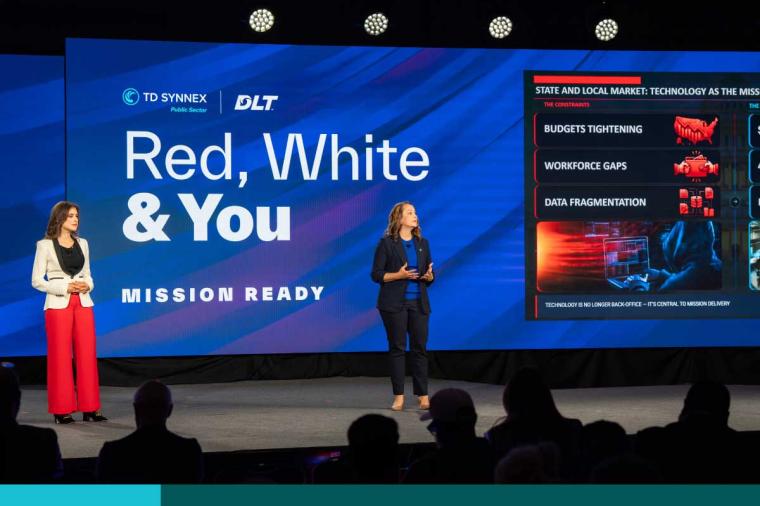
At this year’s Red, White and You conference, our market intelligence team detailed the ins and outs of what we’re seeing across the public sector. Throughout the sessions, one theme became clear: while success in the public sector market used to rely heavily on institutional knowledge and long-standing relationships, agency buying cycles, and slower opportunity development, the market this year looks different. It’s faster, calling for more efficiency, innovation and cost-optimization.
Susanna Patten
Cybersecurity, Education, Federal Government, Healthcare, Market Intelligence, State & Local Government, Technology
At this year’s Red, White and You conference, our market intelligence team detailed the ins and outs of what we’re seeing across the public sector. Throughout the sessions, one theme became clear: while success in the public sector market used to rely heavily on institutional knowledge and long-standing relationships, agency buying cycles, and slower opportunity development, the market this year looks different. It’s faster, calling for more efficiency, innovation and cost-optimization.
Susanna Patten
Cybersecurity, Education, Federal Government, Healthcare, Market Intelligence, State & Local Government, Technology
At this year’s Red, White and You conference, our market intelligence team detailed the ins and outs of what we’re seeing across the public sector. Throughout the sessions, one theme became clear: while success in the public sector market used to rely heavily on institutional knowledge and long-standing relationships, agency buying cycles, and slower opportunity development, the market this year looks different. It’s faster, calling for more efficiency, innovation and cost-optimization.
Susanna Patten

Cybersecurity, Data & Storage, Federal Government, Market Intelligence
More than 15 years ago, the DoW formally elevated cyber pursuits to the same strategic level as sea, land, air and space. This acknowledgement shifted cybersecurity from risk management to a national defense need, underscoring the importance of protecting the DoW’s defense infrastructure and networks. Defense cybersecurity challenges have since evolved into a multi-domain conflict, particularly with China and Russia - both aiming to infiltrate digital assets.
Toan Le
Cybersecurity, Data & Storage, Federal Government, Market Intelligence
More than 15 years ago, the DoW formally elevated cyber pursuits to the same strategic level as sea, land, air and space. This acknowledgement shifted cybersecurity from risk management to a national defense need, underscoring the importance of protecting the DoW’s defense infrastructure and networks. Defense cybersecurity challenges have since evolved into a multi-domain conflict, particularly with China and Russia - both aiming to infiltrate digital assets.
Toan Le

Cloud, Cybersecurity, Federal Fiscal Year End, Market Intelligence, Technology
The FY27 federal budget request was released on April 3rd, and is providing an initial look at the momentum and impact IT investments will have in the coming years.The Department of War’s unprecedented $1.5T request underscores attention on national security and pushing towards next-generation warfighting capabilities, while across the whole of government, there is expected to be a continued mandate to drive efficiency, consolidate systems and align technology investments with administration priorities.
Nikki Hamlin